
8 Ways to Support Mental Health Through Food & Nutrition

The science is clear: What we eat profoundly affects how we feel. A well-balanced, nutrient-rich diet isn’t just about physical health—it plays a critical role in our mental health, like reducing anxiety, depression, and cognitive decline. Even for those already experiencing mental health challenges, improving diet and nutritional quality can be a powerful tool for enhancing mood, energy, and overall well-being. Nourishing can help you flourish. This post will help you learn how to boost your mood with every bite, helping you to discover the diet-mind connection!

What is mental health?
According to the Mental Health Commission of Canada,, mental health is more than just the absence of illness—it’s a state of well-being where individuals recognize their potential, manage stress effectively, and contribute meaningfully to their communities. Emotional, physical, psychological, and social well-being all play a role in maintaining this balance.
Mental health concerns refer to a range of thoughts, behaviors, and emotions that an individual may experience, leading to distress or impaired functioning in different parts of their life. Mental health disorders are diverse and include anxiety disorders, ADHD, mood disorders like depression, self-harm, eating disorders, psychotic disorders, personality disorders, dissociative disorders, cognitive disorders and substance abuse. There is no health without mental health.
The Growing Mental Health Crisis in Canada
One in five Canadians—over 6.2 million people—experience mental illness. For perspective, that’s nearly three times the number of people living with Type 2 diabetes (22 million) and more than four times those affected by heart disease (14 million). The problem is even more pronounced among youth, with 1 in 7 individuals aged 15-24 facing mental health challenges (Mental Health Commission of Canada). Sadly, only 1 in 5 receive help.
The most common mental health conditions in youth include anxiety disorders, ADHD, eating disorders and depressive disorders (Canadian Mental Health Association, Seely & Matheson, 2019).
Treatments for mental health aren’t 100% effective
Treatment for mental health, including standard medications and psychotherapy are not universally effective, with only about half (50%) of patients benefiting from them.. Antidepressants work in only 33% of cases, while anti-anxiety medications are fully effective in just 25% of individuals. In ADHD, up to 30% of individuals do not respond to drug therapies, and after two years, only half (50%) of those on medication will have continued to use it (Mental Health Commission of Canada).
Unmanaged mental health has an impact on our physical health, including cancer, diabetes, heart health, multiple sclerosis, Parkinson’s disease (Seely & Matheson, 2019) and weight management (Obesity Canada). Of course, there is a major economic impact (Mental Health Commission of Canada).
This highlights the need for complementary approaches—like nutritional psychiatry—to work with medications and psychotherapy support mental health.
Nutritional psychiatry: the Food-Mood Connection
Nutritional psychiatry explores how diet and nutrition influences mood, behaviour and cognitive function ie. mental health (American Society for Nutrition). Research consistently shows that a diet rich in essential nutrients fuels brain function, balances neurotransmitters, and reduces inflammation—all key factors in mental well-being (Nutritional psychiatry: Towards improving mental health by what you eat – PubMed).
The Nutritional Demands of our Brains
The brain is the body’s most energy-hungry organ, consuming 20% of total energy intake despite making up only 2% of body weight (Selly & Matheson, 2019). Proper nutrition supports focus, emotional regulation, and stress management. Nutrients build and maintain the structure and function of our brain. A well-fueled brain is more resilient in the face of stressors, has more focus and is supported with a more stable mood.
Neurotransmitters are natural chemicals needed to help regulate our mood, and depend on the nutrients we consume each day. Examples of neurotransmitters include serotonin, dopamine, norepinephrine and acetylcholine. These neurotransmitters are made directly from food components. Balanced neurotransmitters give us good mental and emotional health (Seely & Matheson, 2019).
Just like diet and nutrition is critical to managing cholesterol, diabetes and our gut health, what we eat and drink is critical for our mental health (Nutritional medicine as mainstream in psychiatry, Seely and Matheson 2019).
Nutrition for supporting mental health
There are several key nutrients that research has found can strengthen and support our mental health.
Omega-3 fats: Brain Fuel
Omega-3s, especially EPA and DHA, support brain structure, reduce inflammation, and promote cell regeneration (Seely & Matheson, 2019). Low intake is linked to cognitive decline and an increased risk of depression and anxiety (Omega-3 fatty acids and depression: scientific evidence and biological mechanisms and Omega-3 fatty acids for mood disorders).
Top Sources: Fatty fish (salmon, mackerel, trout), walnuts, flaxseeds, chia seeds, algae-based supplements, foods fortified with omega-3.
Supplemental omega-3 may be beneficial, though not everyone should take an omega-3 supplement (people taking certain medications, people with bleeding disorders, pregnant women, children, people with certain allergies and those about to undergo surgery should speak with their doctor or dietitian first) . Talk to your registered dietitian about what is the right level for you.
Complex Carbohydrates: Mood Stabilizers
Low-carb diets can worsen depressive symptoms by disrupting blood sugar levels and serotonin production. Slow-digesting, fiber-rich carbs help maintain steady energy and mood balance (Understanding nutrition, depression and mental illnesses).
Supporting our mood with regular meals and planned snacks (not grazing) contributes to a stable mood by supporting our brain with a steady stream of glucose (Seely, Matheson 2019).
Top Sources: Whole grains (quinoa, oats, brown rice, barley, wraps, bread), legumes, vegetables, fruits. Carbohydrates coming from refined sugars should be limited.
Vitamins D: The Sunshine Nutrient
Vitamin D is essential for neurotransmitter function and nerve health. Deficiency has been linked to depression, anxiety, seasonal affective disorder, schizophrenia and cognitive decline (Nutrition as Metabolic Treatment for Anxiety, Vitamin D deficiency and depression in adults: systematic review and meta-analysis, Vitamin D and Psychiatric Illnesses).
Top Sources: Sunlight exposure, fatty fish, egg yolks, fortified dairy, supplements. Depending on where you live, your body may not be able to make vitamin D from sunlight at certain times of the year.
B Vitamins: Energy & Mood Boosters
Several B vitamins have been found to play a crucial role in mental health. B12, B6, B2 (riboflavin) and folate are essential for brain energy metabolism and neurotransmitter production. Low levels are associated with mood disorders and cognitive decline (Keely and Matheson 2019, Vitamin B12 supplementation in treating major depressive disorder: a randomized controlled trial and B-vitamins in Relation to Depression in Older Adults Over 60 Years of Age: The Trinity Ulster Department of Agriculture (TUDA) Cohort Study).
Iron: Brain Oxygenation
Iron deficiency leads to brain fog, fatigue, and reduced cognitive function. It plays a key role in neurotransmitter synthesis (which are important for mood regulation and cognitive function) and oxygen transport (Disrupted iron homeostasis causes dopaminergic neurodegeneration in mice | PNAS).
Top Sources: Red meat, legumes, nuts, fortified cereals, leafy greens.
Magnesium: the Stress Regulator
Magnesium is critical for neurotransmitter function and stress response. Deficiency is linked to depression, ADHD, and anxiety (The Role and the Effect of Magnesium in Mental Disorders: A Systematic Review).
Top Sources: Nuts, seeds, legumes, dark leafy greens, whole grains, fish.
Antioxidants & Flavonoids: Cognitive Protectors
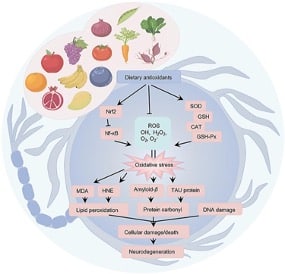
Because our brain is a highly metabolically active organ, it is especially prone to oxidative damage (Keely and Matheson 2019). Antioxidants and flavonoids reduce oxidative stress, enhance cognition, and combat inflammation linked to mental health disorders (Neuroprotective Effect of Antioxidants in the Brain; and Oxidative stress, the blood–brain barrier and neurodegenerative diseases: The critical beneficial role of dietary antioxidants; and Flavonoids | Linus Pauling Institute ).
Top Sources: Berries, green tea, citrus fruits, colorful vegetables, dark chocolate.
Image Source from here.
Nutrition as a Pillar of Mental Well-Being
Food is one of the most powerful, yet underused therapies for our health and wellness. Food and nutrition can have a profound impact on our mental health. And when we aren’t feeling well, poor mental health can have a profound impact on what we eat. Aim to improve, not perfect, your diet and nutrition.
While medications and therapy remain important, a nutrient-rich diet can enhance mood, cognition, and emotional resilience. By making small, sustainable dietary changes, individuals can take control of their mental well-being—one meal at a time.
8 Ways to Support Mental Health Through Food & Nutrition
- Load Up on Leafy Greens: Add spinach to scrambled eggs, top sandwiches with arugula, or roast Brussels sprouts as a side dish. Try these Chicken Lettuce Wraps with a Peanut Sauce.
- Prioritize Whole Grains: Swap refined carbs for quinoa, brown rice, oats, or whole wheat bread. Try this recipe for 5-Grain Oatmeal or Roasted Sweet Potato Quinoa Salad.
- Incorporate Omega-3s: Enjoy fatty fish like a salmon burger, tuna salad, or top your salads or meals with flaxseeds, chia seeds, or walnuts.
- Snack Smartly: Choose nuts, fruits, vegetables, or hummus over ultra-processed snacks like crackers, chips or candies. Try these Oatmeal & Date Energy Bites.
- Boost Legume Intake: Add lentils and beans to soups, grain bowls, or salads. Try this Warmly Spiced Vegetable Stew.
- Increase Antioxidants: Make meals vibrant by including a variety of colorful fruits and vegetables to most meals. Try this Honey Soy Chicken Zucchini Noodle Bowl.
- Sprinkle on Seeds: Add chia, hemp, or flaxseeds to yogurt, oatmeal, or salads for an extra nutrient boost. Try these No-Bake California Prune Power Balls.
- Meet with a Registered Dietitian to seek personalized nutrition coaching, talk about your food and nutrition struggles, strategize on meals, snacks and supplements, so that you can nourish to flourish.
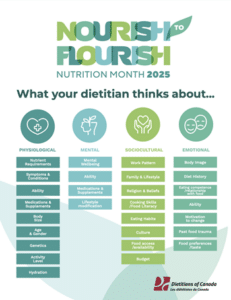
Final thoughts on Nutrition and Mental Health
If you or someone you know is struggling with their mental health, it is critical to seek help from your doctor and regulated mental health professional. The following are some resources to help get you started:
If you are in an emergency, call 911.
- Access Mental Health 403-943-1500
- Distress Center Calgary
- Addiction & Mental Health | Alberta Health Services
- Addiction & Mental Health Options
- Mental health & addiction helplines
- BounceBack(R) | Reclaim your health.
Acknowledgement:
Thank you to Christina Seely (BSc, RD, CDE) and Kelly Matheson (MSc, RD, CDE), two dietitians in Canada with expertise and extensive experience in nutrition for mental health. They presented at the Dietitians of Canada Conference in 2019. Their recorded presentation, The Pivotal Role of Nutrition in Mental Health, along with references and resource guide was incredibly informative and helped to shape the creation of this blog post.
Seely Christina, Matheson Kelly. The Pivotal Role of Nutrition in Mental Health. Presentation at the Dietitians of Canda National Conference. (2019).
Tagged in: Nourish to flourish, Nutrition Month, mental health, midlife nutrition
2 Comments
Leave a Comment


Welcome to the Energize Nutrition blog, where we share evidence-based nutrition content, designed to empower people’s midlife. Take a look around to find information on feeling your best.
If you need more individualized support, reach out to set up a free discovery call with Kristyn Hall.

Battling chronic hunger, poor energy, or inflammation? Discover what this powerful ingredient is and why it might be the solution!




A brilliant read, thank you for sending!
– Laurie
Thank you for sharing a thoughtful guide. What we eat is what we are, so food is a significant factor in having a healthy, long life. Although our bodies become less flexible and energetic as we age, a healthy diet and lifestyle can help us stay healthy and fight aging.